Hernia
Overview
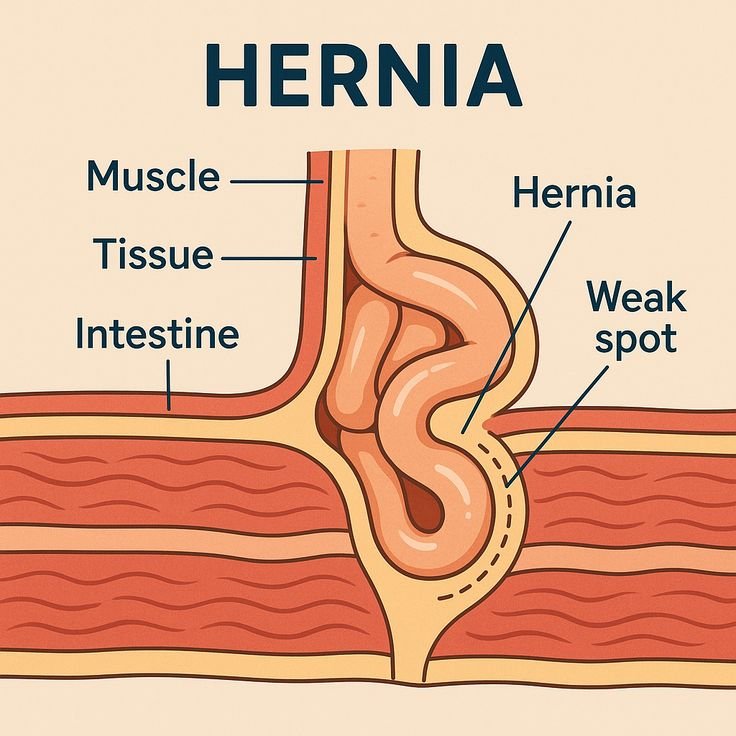
A hernia is a common condition in which an internal organ or tissue pushes through a weak spot in the surrounding muscle or connective tissue, most often in the abdominal wall. It can occur in different areas such as the groin (inguinal hernia), near the navel (umbilical hernia), at the site of a previous surgical incision (incisional hernia), or in the upper abdomen (hiatal hernia). While some hernias may initially be painless, they generally do not resolve on their own and may gradually increase in size, leading to discomfort or complications. Timely evaluation and appropriate treatment help prevent progression and ensure effective management.
Causes
Hernias develop due to a combination of muscle weakness and increased pressure within the abdomen. This weakness may be present from birth or develop over time due to aging, injury, or previous surgeries. Factors that increase abdominal pressure include heavy lifting, chronic coughing, constipation, obesity, and pregnancy. Lifestyle habits and occupations that involve repeated strain can also contribute to hernia formation. Understanding these risk factors is important for both prevention and long-term management.
Symptoms
The most common symptom of a hernia is a visible bulge or swelling in the affected area, which may become more noticeable when standing, coughing, or straining. Patients often experience a feeling of heaviness, discomfort, or dull pain, especially during physical activity. In some cases, there may be a burning or aching sensation at the site. Severe symptoms such as sudden intense pain, nausea, vomiting, or inability to push the bulge back may indicate a complication and require urgent medical attention.
Diagnosis
Diagnosis is usually made through a physical examination, where the doctor assesses the swelling and its behavior with movement or strain. In certain cases, imaging tests such as ultrasound, CT scan, or MRI may be recommended to confirm the diagnosis, evaluate the size of the hernia, and plan appropriate treatment.
Treatment Options
Surgical repair is the only definitive treatment for a hernia. The procedure involves repositioning the protruding tissue and strengthening the weakened area, often with the help of a mesh to reduce the risk of recurrence. Laparoscopic hernia surgery is widely preferred for suitable patients, as it uses small incisions and specialized instruments to perform the repair with precision. This minimally invasive approach offers advantages such as reduced pain, faster recovery, minimal scarring, and an early return to normal activities. In some cases, open surgery may be recommended depending on the size and complexity of the hernia.
Post-Treatment Care
Recovery after hernia surgery is generally smooth, especially with laparoscopic techniques. Patients are encouraged to resume light activities soon after the procedure while avoiding heavy lifting for a few weeks. Mild discomfort or swelling at the surgical site is common but improves gradually. Maintaining a healthy diet, preventing constipation, and following medical advice during follow-up visits help ensure proper healing and long-term success.
Risks or Complications
Hernia surgery is considered safe, but potential risks include infection, bleeding, pain at the surgical site, or recurrence of the hernia. Rarely, complications related to the mesh or surrounding tissues may occur. With experienced surgical care and proper postoperative management, the likelihood of complications is low and outcomes are highly favorable.
When to See a Doctor
It is important to consult a doctor if you notice a persistent swelling or bulge in the abdomen or groin, especially if it increases in size or causes discomfort. Immediate medical attention is required if the hernia becomes painful, tender, or cannot be pushed back, or if symptoms such as nausea and vomiting develop. Early evaluation by a specialist like Dr. Chitterusu Raghuram ensures timely treatment and helps prevent serious complications.
Explore more:
Explore Our Specialities
Our Services
Don’t Ignore Your Symptoms
Get timely diagnosis and expert treatment for lasting relief.