Pre Surgery Instructions
Pre Surgery Instructions
Overview
Preparing properly before surgery is an important step in ensuring a safe procedure, smoother recovery, and better overall surgical outcomes. Pre-surgery instructions are carefully designed guidelines provided by the surgeon to help patients physically and mentally prepare for their operation. In Surgical Gastroenterology, these instructions may vary depending on the type of procedure being performed, the patient’s medical condition, and the complexity of the surgery. Following these recommendations correctly can significantly reduce the risk of complications during and after surgery.
Pre-operative preparation usually includes dietary changes, medication adjustments, fasting guidelines, blood tests, imaging investigations, and fitness assessments. Patients may also receive instructions regarding smoking cessation, alcohol intake, and management of existing medical conditions such as diabetes, hypertension, or heart disease. A clear understanding of these instructions helps patients approach surgery with confidence and improves the chances of a smooth recovery.
Causes
The need for detailed pre-surgery instructions arises from the importance of minimizing surgical risks and optimizing patient safety. Gastrointestinal surgeries often involve the digestive system, liver, pancreas, gallbladder, or intestines, and these procedures require careful planning to avoid complications related to anesthesia, infection, bleeding, or delayed healing. Patients with underlying health conditions may require additional preparation to stabilize their overall health before surgery.
Certain medications, including blood thinners, diabetes medications, or herbal supplements, can interfere with surgery or anesthesia and may need to be temporarily stopped. Smoking and alcohol consumption can also affect lung function, immunity, and wound healing, making pre-operative lifestyle modifications essential. In some gastrointestinal surgeries, bowel preparation or dietary restrictions may also be necessary to ensure better surgical visibility and reduce the risk of infection.
Symptoms
Patients who are preparing for surgery may experience anxiety, stress, confusion, or uncertainty regarding the procedure and recovery process. Some individuals may have symptoms related to their underlying gastrointestinal condition, such as abdominal pain, vomiting, difficulty swallowing, bloating, rectal bleeding, or digestive disturbances. These symptoms often influence the urgency and type of surgery required.
Inadequate preparation before surgery can sometimes lead to avoidable complications such as dehydration, uncontrolled blood sugar levels, elevated blood pressure, or adverse reactions to anesthesia. Patients who do not follow fasting instructions properly may face delays or cancellations of surgery due to increased anesthesia-related risks. Therefore, understanding and following pre-operative guidance is extremely important for patient safety.
Diagnosis
Before surgery, a thorough medical evaluation is performed to assess the patient’s overall health and surgical readiness. This process may include blood investigations, urine tests, ECG, chest imaging, endoscopy, ultrasound, CT scans, or other specialized diagnostic procedures depending on the medical condition. The surgeon and anesthesia team carefully review the patient’s medical history, allergies, previous surgeries, and current medications.
Patients are also evaluated for conditions such as diabetes, hypertension, heart disease, lung disorders, or infections that could affect the surgical outcome. Nutritional status and physical fitness may also be assessed, especially in major gastrointestinal surgeries. These evaluations help create an individualized surgical plan and reduce the possibility of unexpected complications during the procedure.
Treatment Options
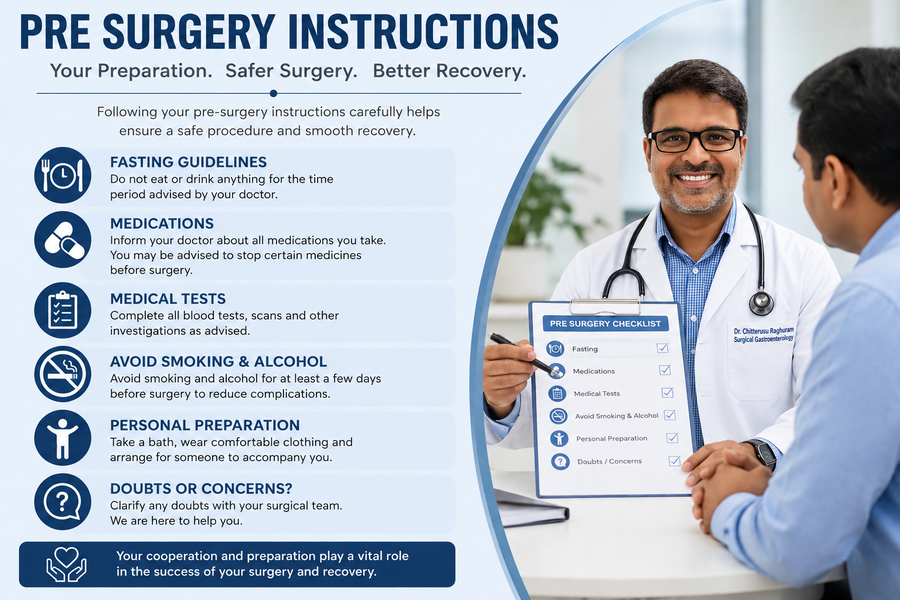
Pre-surgical preparation is considered an essential part of the treatment process. Patients are generally advised to follow fasting instructions for a specific number of hours before surgery to reduce the risk of aspiration during anesthesia. Medication schedules may be modified based on the patient’s medical condition, and some patients may require temporary discontinuation of blood-thinning medications or certain supplements.
For gastrointestinal surgeries involving the intestines or colon, bowel preparation may be recommended to cleanse the digestive tract before surgery. Patients may also be encouraged to maintain hydration, follow a soft or liquid diet, and avoid smoking or alcohol consumption for several days before the procedure. In some cases, physiotherapy, breathing exercises, or nutritional support may be advised to improve post-operative recovery.
The surgical team will also explain the procedure, expected recovery period, possible risks, hospital stay, and post-operative care instructions. This discussion allows patients and families to make informed decisions and feel more prepared for the treatment journey.
Post-Treatment Care
Recovery after gastrointestinal surgery depends on the type of procedure performed and the patient’s overall health condition. Patients are usually monitored closely for pain control, wound healing, bowel function, hydration, and infection prevention. Early mobilization, breathing exercises, and gradual return to normal activities are encouraged to support recovery and reduce complications such as blood clots or chest infections.
Dietary progression is carefully managed after surgery. Patients may initially start with liquids before gradually returning to soft foods and regular meals as tolerated. Follow-up appointments are important to monitor healing, review biopsy or surgical reports if needed, and address any concerns during recovery. Patients are also advised to follow medication schedules properly and avoid strenuous activities until cleared by the surgeon.
Risks or Complications
Although modern surgical techniques and anesthesia have made gastrointestinal surgeries safer, every surgical procedure carries certain risks. Failure to follow pre-surgery instructions can increase the chances of complications such as infection, excessive bleeding, anesthesia-related problems, delayed healing, or respiratory issues. Patients with uncontrolled diabetes, hypertension, or heart disease may face higher surgical risks if their medical conditions are not properly managed before surgery.
Other possible complications include dehydration, electrolyte imbalance, blood clots, wound complications, or digestive disturbances after surgery. Smoking and alcohol use can further delay recovery and increase the likelihood of post-operative infections. Careful adherence to pre-operative and post-operative instructions plays a major role in minimizing these risks.
When to See a Doctor
Patients should consult their surgeon immediately if they experience fever, severe abdominal pain, persistent vomiting, breathing difficulty, chest pain, unusual bleeding, or worsening symptoms before the scheduled surgery. It is also important to inform the doctor about any recent illness, infection, medication changes, or allergies before the procedure.
After surgery, medical attention should be sought if there is increasing pain, redness or discharge from the surgical site, persistent fever, inability to eat or drink, swelling, or any sudden health changes. Early communication with the surgical team helps identify complications quickly and ensures timely medical care for a safer recovery.